Persistent AI Persona
An AI persona that stays alive, remembers, plans, and acts. Deploy it into production through capabilities. Keep it running between sessions.
Persona is a live agent runtime, not a disposable prompt wrapper. A deterministic core keeps the system coherent while AI proposes; persistent memory, long-horizon plans, and typed capabilities let it operate across chat, agenda, notifications, documents, whiteboards, and embedded product workflows.
What Persona Actually Is
A production agent runtime shaped like a person.
Most AI products flatten a person into prompts and API calls. Persona is built for the harder problem: keeping one synthetic identity coherent while it observes, remembers, plans, and executes across real operating surfaces.
An AI persona, not a prompt wrapper
Persona is meant to emulate a specific operator with AI at the center, instead of faking continuity with one-off prompts and session glue.
Persistent memory that survives sessions
The runtime keeps episodic and derived memory so context can persist across days, tools, and restarts instead of disappearing after the latest exchange.
Long-horizon planning with live replanning
Persona can hold an active plan, revise it as the world changes, and preserve plan continuity over time instead of resetting on every task.
Production capabilities with bounded actions
Actions happen through explicit capabilities for chat, agenda, notifications, documents, whiteboard, datastore, billing, and external adapters.
Built-in Capabilities
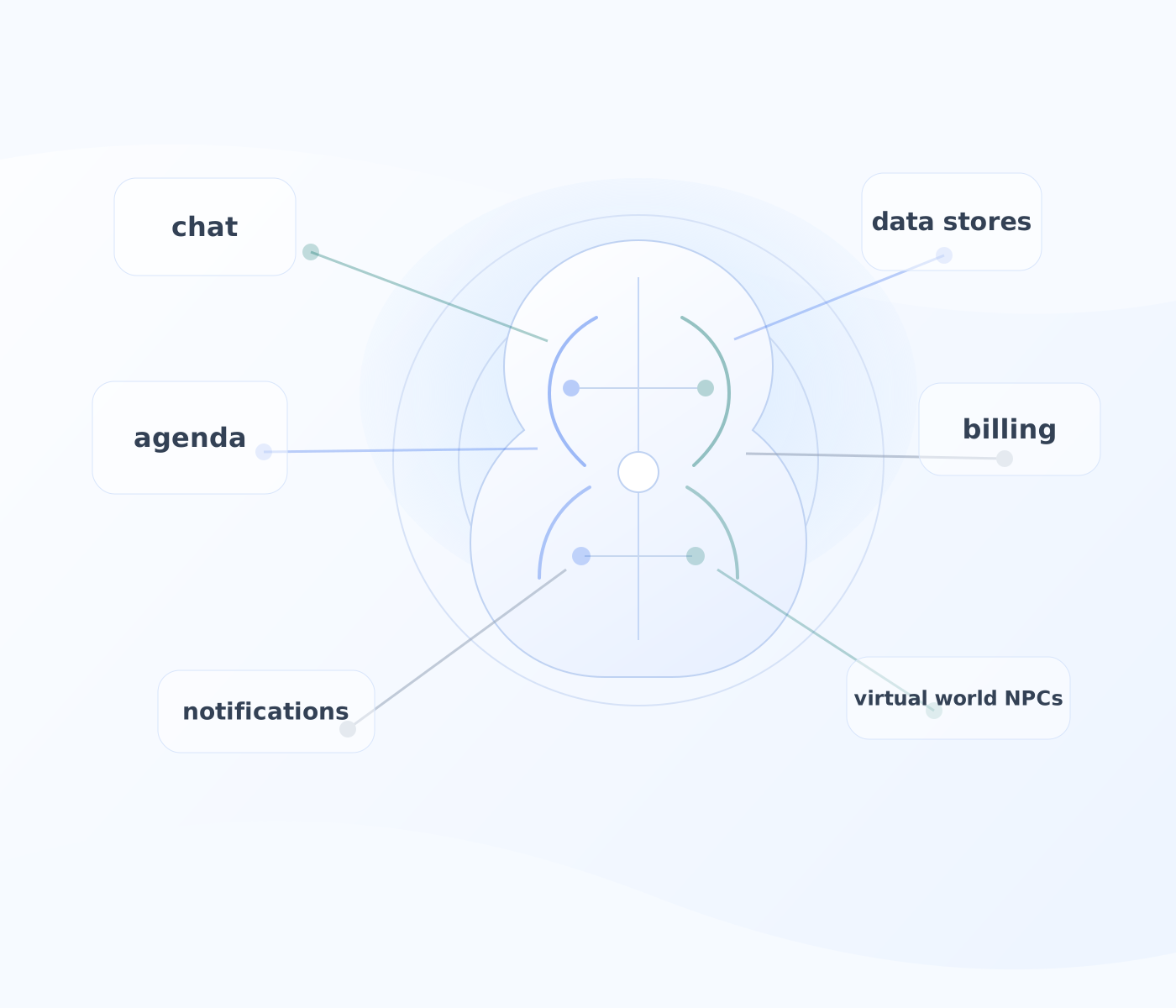
Persona ships with built-in capabilities connected directly to its brain.
The system gives Persona out-of-the-box capabilities you can use directly to build with very little backend work: KV datastores, document libraries, agenda, chat, whiteboard, billing, and other native surfaces that are already wired into the runtime. Billing lets the product charge end customers through built-in top-up and subscription models instead of forcing teams to build a separate payments layer around the runtime.
How The Runtime Stays Alive
Observe, remember, plan, act, repeat.
Observe live events
Persona receives bounded observations from product surfaces, native tools, and connected environments while keeping the runtime legible.
Update persistent memory
What actually happens is committed to durable memory so the next decision starts from context, not from an empty session.
Maintain the long-term plan
The runtime keeps an active plan, reviews it against new evidence, and replans when the environment changes.
Execute through capabilities
Validated capabilities let Persona act inside production systems without collapsing execution, identity, and memory into one chat pane.
Long-Term Planning
The runtime does not reset every time a user comes back.
Persona can carry a base plan, update it as reality shifts, commit outcomes to durable memory, and continue with the next step. That is what makes it useful for live operators, persistent assistants, and long-running product agents.
Why Teams Use It
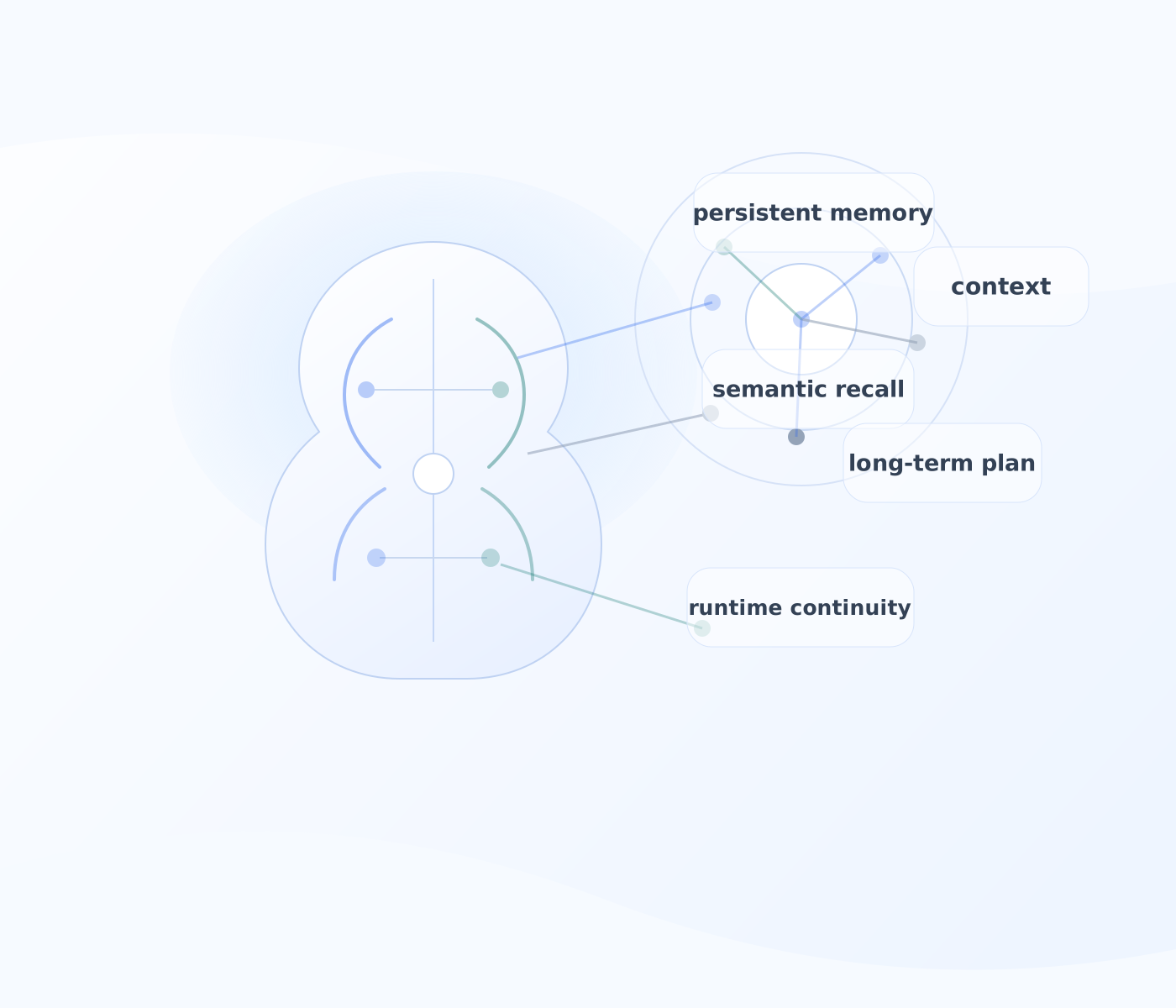
The architecture is designed for continuity under real load.
Deterministic control, typed capabilities, and durable context matter more than demo theatrics when the Persona has to keep working tomorrow.
Core decides, AI proposes
LLMs help interpret, plan, and critique, but the runtime keeps deterministic control over memory writes, plan mutation, and side effects.
Customer billing is built in
Persona can support customer charging directly inside the product with top-up and subscription models, plus a Stripe-first external PSP path.
Operational boundaries stay visible
Permissions, billing, tenancy, and rollout are part of the product shape so the runtime can move into serious environments without losing control.
Operational Control
Agency is only useful when it stays bounded.
Bounded execution
Persona acts through declared capabilities with explicit schemas and boundaries. It is meant to be agentic, not unbounded.
Operator visibility
High-value deployments need auditability, permissions, billing clarity, and room for human override when the runtime should yield.
High-risk uses still need domain controls
Medical, legal, safety-critical, or regulated uses still require deployment-specific controls and accountable humans.
Ready to deploy the first runtime?